English


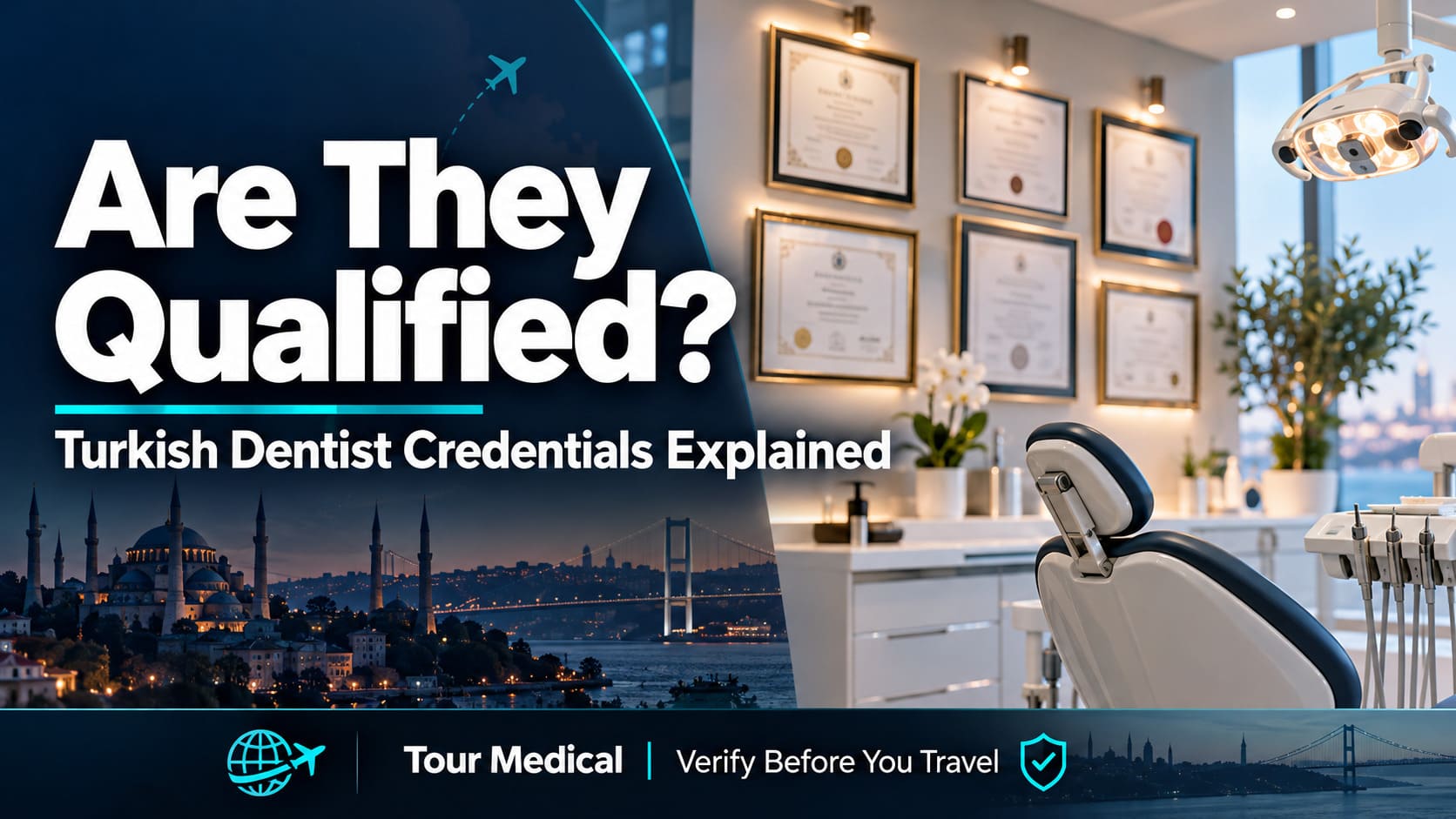
"Are Turkish dentists actually qualified?" is the question behind most of the others. The short answer is that dentistry in Turkey is a five-year university degree followed by Ministry of Health licensing and mandatory chamber registration — a structure closer to the UK and Germany than most people expect. The longer answer, and the more useful one, is how you check a specific dentist rather than taking a country's word for it.
How Does Someone Become a Dentist in Turkey?
Turkish dental education is a five-year undergraduate programme at a faculty of dentistry, entered through the national university examination, which is among the more competitive routes into higher education in the country. The degree includes clinical years treating patients under supervision.
Graduation alone does not permit practice. A dentist must then be licensed by the Ministry of Health and registered with the local chamber of the Turkish Dental Association. Both are legal requirements, and both are checkable.
| Stage | What it involves | Typical duration |
|---|---|---|
| Faculty of Dentistry degree | Five-year programme including supervised clinical practice | 5 years |
| Ministry of Health licence | Diploma registration; required before practising | — |
| Chamber registration | Mandatory membership of the local dental chamber | — |
| Specialist training (optional) | Postgraduate residency in a recognised speciality | 4–5 further years |
What Do the Titles Actually Mean?
Turkish clinics use a small set of protected titles, and reading them correctly tells you more than any marketing page. Under Turkish health advertising rules these are the only titles a clinic may use, so a page that invents anything else is already outside the regulations.
| Title | Meaning |
|---|---|
| Dt. | Dentist — completed the five-year degree and is licensed to practise |
| Dr. Dt. | Dentist holding a doctorate, usually a research PhD in a dental field |
| Op. Dr. | Surgeon — completed a surgical speciality residency |
| Prof. Dr. / Doç. Dr. | Academic ranks, awarded through the national academic appointment system |
Recognised dental specialities include oral and maxillofacial surgery, prosthodontics, periodontology, endodontics and orthodontics. If your case is surgical or full-arch, ask which speciality the treating clinician holds — not whether the clinic "has specialists".
? Want to know exactly who would treat you and what their speciality is? Ask us before you commit to anything — we will put it in writing. Get My Free Assessment
What Is the Health Tourism Authorisation Certificate?
Separately from individual qualifications, clinics treating international patients in Turkey must hold a health tourism authorisation certificate issued under the Ministry of Health's framework. It is granted to the facility, not the dentist, and it covers requirements such as staffing, interpreting provision, patient record-keeping and complaint handling.
This is worth knowing because it is a filter. A clinic that treats foreign patients without it is operating outside the system that exists to protect you, and asking for the certificate number is an entirely normal request that a compliant clinic answers without hesitation.
How Do You Verify a Clinic Yourself?
You do not need to take anyone's word for any of this. Four questions, asked by email before you travel, will tell you most of what you need to know — and the speed and tone of the answers will tell you the rest.
- Who will actually perform my treatment, and what is their title and speciality? A name, not a department. If the answer is vague, ask again.
- What is the clinic's health tourism authorisation certificate number? A compliant clinic provides it.
- Which implant system and ceramic will be used, by brand and reference? This is verifiable independently, and it also tells you whether the quote is for what you think it is.
- What is the written follow-up protocol if something needs adjusting? Ask for it as a document, not a reassurance.
Two smaller checks are worth doing as well. Look for a physical address you can find on a map rather than a booking office. And ask whether the laboratory is on site — not because off-site is wrong, but because the answer determines how quickly an adjustment can be made while you are still in the country.
Do Turkish Dentists Use the Same Materials?
Largely yes, because implant systems and ceramics are international products. The same major implant manufacturers and the same zirconia and lithium disilicate brands used in the UK and Germany are available in Turkey, and reputable clinics will tell you exactly which they use.
What varies between clinics anywhere — in Turkey, the UK or Germany — is which tier of product is quoted. This is precisely why the brand-and-reference question matters more than the country question. A quote that names the system can be compared with any other quote in the world; one that says only "premium implant" cannot be compared with anything.
Why Is There So Much Variation in Reputation?
Because Turkey's dental sector is large and the range within it is wide. Careful clinics with specialist teams and rushed high-volume operations both exist, and both market to the same patients. The negative stories that circulate are usually about the second kind, and the mistake is reading them as a verdict on the country rather than on a particular business model.
The practical consequence is that verification does the work that reputation cannot. Every one of the four questions above is answerable in writing before you book a flight, and any clinic that resists answering them has given you your answer.
Tour Medical has coordinated international patient care from Kusadasi since 2005, and the treating clinician, their speciality and the materials to be used are set out in your plan before you travel. Our about page covers the team, and dental treatments in Turkey sets out what each package includes. UK patients can reach a local number, +44 203 608 06 06, at any stage.
? Send us the quote you have been given by any clinic and we will tell you what it does and does not specify. No obligation. Get My Free Quote
Frequently Asked Questions
How long does it take to qualify as a dentist in Turkey?
Five years at a faculty of dentistry, entered through the national university examination, followed by Ministry of Health licensing and mandatory registration with the local dental chamber. Specialist training in fields such as oral surgery or prosthodontics adds a further four to five years.
What does Dt. mean in front of a Turkish dentist's name?
Dt. means dentist — the person has completed the five-year degree and is licensed to practise. Dr. Dt. indicates a doctorate in a dental field, Op. Dr. indicates a completed surgical residency, and Prof. Dr. or Doç. Dr. are academic ranks.
Do Turkish dental clinics need a licence to treat foreign patients?
Yes. Clinics treating international patients must hold a health tourism authorisation certificate issued under the Ministry of Health's framework, covering staffing, interpreting, record-keeping and complaint handling. Asking for the certificate number is a normal request that a compliant clinic answers directly.
How can I verify a Turkish dentist's credentials before travelling?
Ask four questions by email: who will perform the treatment and what is their title and speciality; the clinic's health tourism authorisation certificate number; the implant system and ceramic by brand and reference; and the written follow-up protocol. A compliant clinic answers all four without hesitation.
Do Turkish clinics use the same implants as UK clinics?
The same major international implant systems and ceramic brands are available in Turkey. What varies between clinics anywhere is which tier of product a quote covers, which is why asking for the brand and reference matters more than asking about the country.
Why do I read such different reviews about dental work in Turkey?
Because the sector is large and varied — careful specialist clinics and rushed high-volume operations both market to the same patients. The difference is usually the business model rather than the country, which is why verifying a specific clinic in writing is more reliable than judging by national reputation.